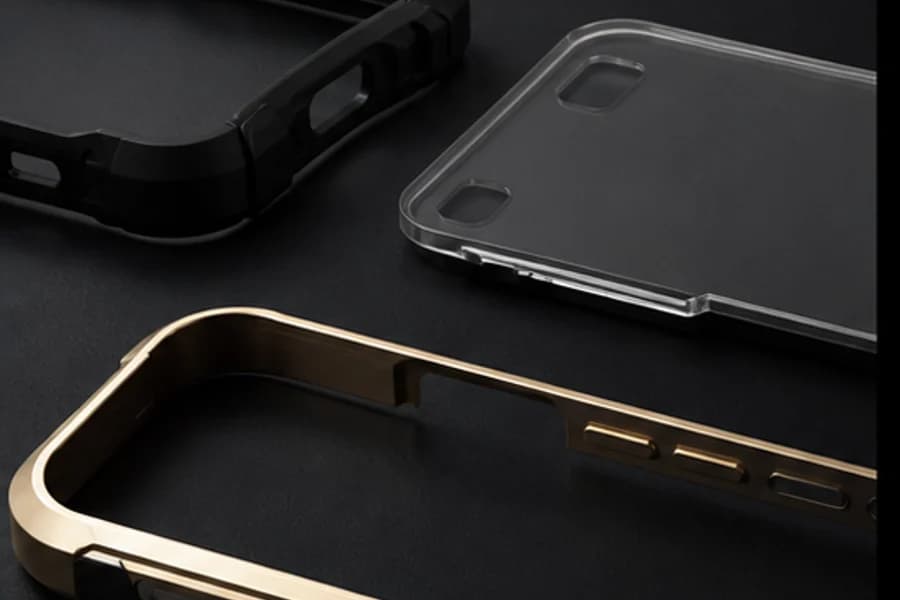
Short answer: there is no universally best phone case material. TPU supports flexible edges and impact-managing geometry; polycarbonate supports rigid, thin shells and stable decorative surfaces; metal can create a precise premium frame but adds design, assembly and device-interaction considerations. Many commercial cases combine materials because structure matters as much as the material name.
For a B2B buyer, material selection should begin with the target user and retail promise. Translate “premium,” “rugged,” “slim” or “magnetic” into specific priorities. Then select a construction and validate it on the intended device.
1. Material name is only the first layer of the specification
Two TPU cases can feel and perform differently because compound, hardness, wall geometry, texture and processing differ. Two PC shells can differ in thickness, stress concentration, coating and assembly. A metal frame can be decorative, structural or both. Therefore, a useful specification includes grade or approved source where appropriate, color, surface, thickness direction, component interface and acceptance sample.
2. TPU: flexible geometry and broad design freedom
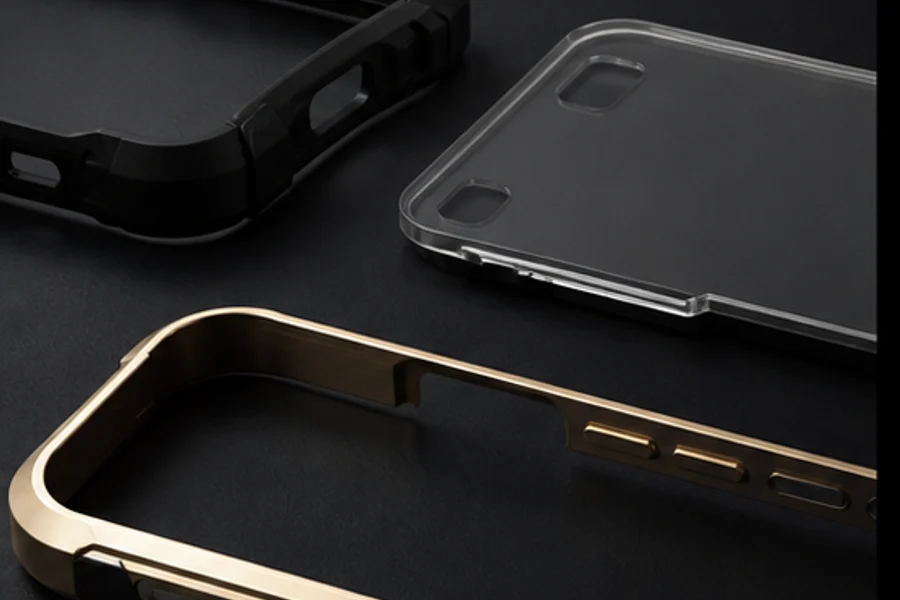
Thermoplastic polyurethane is commonly used for flexible bumpers and one-piece cases. It can wrap around device edges, support grip textures and make installation easier than a fully rigid shell. Corner and lip geometry can be designed to manage everyday impacts, but performance should never be assumed from the word TPU alone.
Buyer questions should cover feel, transparency or opacity, color stability expectations, molding marks, parting lines, edge flash, button design and how the material behaves during repeated installation. For transparent or light colors, align expectations for visual aging and request an approved appearance standard. Avoid unsupported “anti-yellowing” claims.
3. PC: rigid surfaces and dimensional definition
Polycarbonate is frequently used for rigid backs or shells. It can provide a stable surface for decoration and a slim visual profile. Its rigidity also means that snap features, corners and thin bridges need careful design to avoid stress or assembly damage. Surface protection during manufacturing and packing matters because a large rigid panel makes cosmetic variation visible.
Review gate marks, sink or flow appearance, coating consistency, print adhesion if applicable, edge transitions and the way the shell engages with softer components. A rigid back combined with a flexible bumper is a familiar hybrid approach because the materials can be assigned different jobs.
4. Metal frames: premium precision with added questions
A metal element can deliver crisp edges, controlled reflectivity and a premium visual cue. It may also increase part count and create new interface risks. The team must consider how the frame is retained, protected from cosmetic damage and isolated from the device where required. Weight, edge comfort, antenna interaction, wireless charging and magnetic behavior must be evaluated for the exact design.
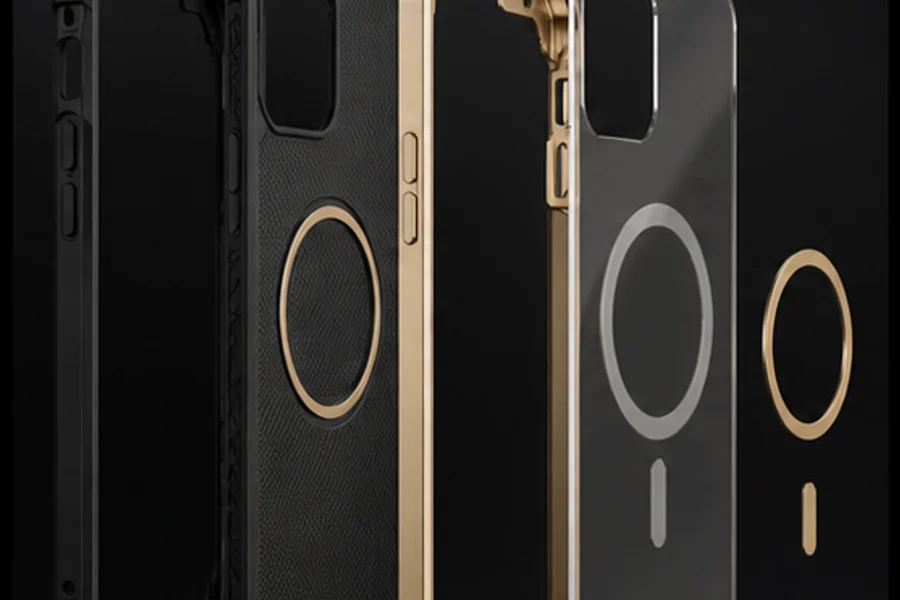
Do not infer device compatibility from appearance. Apple publishes accessory guidance and device drawings, including design considerations relevant to cases and materials. Use current documentation for the intended model and test prototypes. If a magnetic feature is planned, define what “compatible” means in the project rather than treating it as a decorative ring.
5. Hybrid structures: assign one job to each layer
A hybrid case is not automatically better. It is better only when each component has a clear purpose. A flexible edge may support installation and grip; a rigid back may stabilize the surface; a metal frame may define the appearance; an internal layer may protect the device from contact. Extra parts also add tolerance stack-up, assembly operations and opportunities for gaps or movement.
Ask for an exploded component description and assembly sequence. Identify which dimensions locate each part, which interface prevents movement, and which surfaces must remain protected. Review the product after repeated installation, not just when it is newly assembled.
6. Finish is part of the user experience
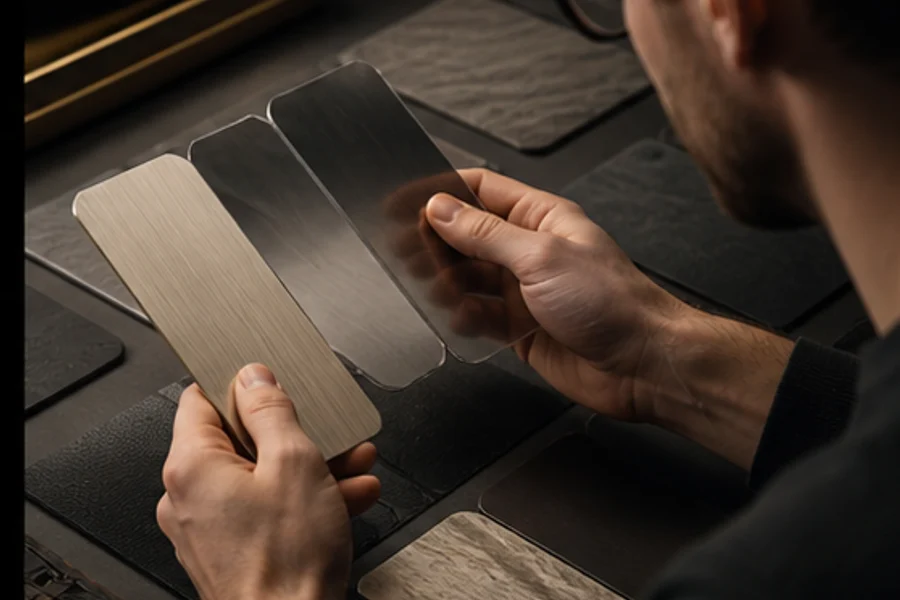
Finish changes perceived quality and sourcing risk. Matte surfaces can reduce visible fingerprints but may reveal rub marks. High-gloss surfaces can look deep and premium while showing scratches or dust. Brushed metal creates directionality that must remain consistent across parts. Texture changes grip and cleaning behavior.
Approve finish with physical samples under agreed lighting. Digital renders are useful for direction but cannot fully communicate reflectivity, texture or hand feel. Define acceptable variation with a signed sample or controlled reference rather than adjectives alone.
7. Build a material decision matrix
Score each construction against the requirements that affect the commercial offer. Typical criteria include slimness, grip, visual precision, installation, decorative options, number of parts, cosmetic sensitivity, packaging protection and device interactions. Weight the criteria by the customer promise, not by what is easiest to manufacture.
| Question | Why it matters |
|---|---|
| What job does each material perform? | Prevents unnecessary complexity. |
| Which surfaces are appearance-critical? | Drives finish control and packing. |
| How do parts locate and retain? | Controls gaps, movement and assembly. |
| Which device functions could be affected? | Defines prototype tests. |
| How will claims be supported? | Prevents unsupported marketing. |
8. Sampling questions for procurement teams
- Is the sample made with production-intent materials and processes?
- Which details are provisional?
- Does the sample fit the exact device model and regional variant?
- Are button force, port access, camera clearance and screen lip acceptable?
- Does the finish match the reference in multiple lighting conditions?
- Have magnetic, charging and wireless functions been reviewed where relevant?
- What changes are proposed before the next version?
Frequently asked questions
Is a metal phone case always more protective?
No. Protection depends on the complete geometry, interfaces and validated performance. A metal accent alone does not establish a protection level.
Is TPU better than PC?
They perform different roles. Flexible TPU and rigid PC are often combined. Choose based on the intended structure and user promise.
Can I approve color from a screen?
Use screens for direction, then approve a physical color and finish reference. Display calibration and surface reflectivity can change perception.
Buyer’s project workbook: questions to resolve before an order
Use this workbook as a cross-functional handover between product, purchasing, quality, marketing and the supplier. Not every question applies to every case, but unanswered questions should be visible rather than silently converted into assumptions.
Product and market definition
- Which exact device models and regional variants are in scope?
- Who is the intended user, channel and retail position?
- Which product benefit is primary: appearance, slimness, grip, structure, magnetic use or another requirement?
- Which statements will appear on the product page or packaging, and what evidence will support them?
- Which details are mandatory and which may change after sampling?
- Who owns final product approval on the buyer’s team?
Construction and appearance
- What is the intended component stack and purpose of every component?
- Which materials and finishes are production-intent, and which remain references?
- Which surfaces are appearance-critical after assembly and after packing?
- How will color, gloss, texture and directional finish be approved?
- What branding method, position, size and color are required?
- Which physical reference controls subjective language such as “premium” or “soft touch”?
Fit and functional review
- What source drawing or device reference controls the design?
- How will camera, flash, microphone, speaker, port and button clearance be checked?
- Which cables, chargers, mounts or accessories must be used during review?
- How should installation and removal feel to the customer?
- Which device interactions require dedicated validation?
- What changes would require a new approval sample?
Quality and documentation
- What constitutes a critical, major or minor defect for this SKU?
- Under what light, distance and viewing time will appearance be judged?
- Which dimensions or functions need recorded checks?
- How will components, samples and revisions be identified?
- Which inspection records should accompany the project?
- Which market documents apply to this exact product and configuration?
Packaging and delivery readiness
- What must the packaging protect during handling and transport?
- Which inserts, labels, barcodes and market information are buyer-supplied?
- How will mixed models or colors be identified?
- What packaging sample must be approved before production?
- Which milestones require written buyer confirmation?
- How will an open issue be escalated, owned and closed?
The workbook is intentionally evidence-led. A supplier does not need to know every answer during the first call. The professional response is to identify the open item, name the person responsible and agree on the point at which it must be resolved.
A practical 45-minute supplier review agenda
A structured meeting is more reliable than an open-ended sales call. Send the agenda and current brief in advance. Invite the person who can answer product or engineering questions, and keep one written open-item list.
- Minutes 0–5: commercial objective. Confirm the target market, channel, device range and why the buyer is developing the product.
- Minutes 5–12: construction. Walk through components, materials, finishes and intended user benefits. Mark every provisional choice.
- Minutes 12–20: fit and interfaces. Review device source data, openings, buttons, camera and screen geometry, installation and accessory interactions.
- Minutes 20–28: sample plan. Define the purpose of the next sample, production-intent details, known substitutions and acceptance criteria.
- Minutes 28–35: quality plan. Connect the highest product risks with incoming, in-process and final checks. Agree how visual defects will be communicated.
- Minutes 35–40: packaging and market readiness. Confirm scope, protective needs, artwork ownership and documents that still require review.
- Minutes 40–45: decisions and owners. Read back every decision, open question, owner and due point.
After the call, issue a one-page summary. Distinguish confirmed facts, proposals and assumptions. Attach the latest references rather than relying on links buried in chat. If the supplier corrects the summary, preserve the correction in the project record. This routine creates a traceable decision trail without requiring complicated software.
Evidence worth retaining
- The approved brief and each controlled revision.
- Device reference and dimensional source used for design.
- Material and finish references, including physical samples where needed.
- Annotated sample reports and supplier responses.
- Packaging configuration and artwork approval.
- Product-specific inspection criteria and defect examples.
- Documents supporting any public compatibility, material or performance claim.
These records do not replace professional compliance work. They make responsibility visible and help prevent a later team member from treating an old assumption as an approved requirement.
Turning the review into a clearer RFQ
The final request for quotation should describe one comparable scope. Start with a product identity block: working SKU, device model, revision, target market and intended channel. Add the construction summary, target materials, surface direction, branding method and packaging scope. Attach controlled references and state which reference governs if files conflict.
Separate price-driving variables. Color count, component count, decoration, individual packing and mixed-SKU requirements can change the commercial picture. Ask suppliers to identify assumptions and exclusions rather than filling gaps silently. MOQ, pricing, sample cost and lead time must be confirmed for the exact project and should never be copied from a different model.
Use an open-item register
Create four columns: item, current status, owner and decision point. Typical entries include device drawing confirmation, color reference, logo artwork, magnetic structure, packaging dieline, market labeling and the next sample’s acceptance criteria. Review the register at every milestone. Close an item only when evidence is attached.
Approval language that reduces ambiguity
- Approved: the reviewed version may become the controlled reference.
- Approved with conditions: only listed corrections remain and their verification method is agreed.
- Revision required: another sample or document review is required.
- For appearance only: fit, function, material or process is not approved.
- For engineering review: visual finish or production consistency is not approved.
End the RFQ with a request for questions. A supplier that identifies a conflict before quoting is contributing useful risk control. The goal is not the fastest number; it is a quotation and sample plan the project team can understand, compare and later audit.
Sources and editorial note
Use Apple’s current accessory resources and dimensional drawings when designing for Apple devices. Material and construction observations here are decision guidance, not performance claims. Any protection, compatibility or durability statement should be supported for the exact final product.